A good-looking website is important, but design alone does not win enquiries. The words on your website play a major role in how people understand your business, trust your services, and decide whether to contact you. For service businesses, strong website copy can make the difference between a visitor leaving the page and a visitor becoming a lead. Google’s guidance also continues to favour helpful, reliable, people-first content that is written to benefit users, not just to rank in search results.
What Is Website Copywriting?
Website copywriting is the process of writing the text that appears across your website. This includes your homepage, service pages, about page, landing pages, contact page, and other key areas of the site.
Good website copy is not just about sounding professional. It is about communication. It helps visitors quickly understand your services, your value, and the action they should take next. For service businesses, copywriting also helps explain things that may not be immediately obvious. Unlike physical products, services often need more explanation because people are buying expertise, process, support, and outcomes rather than something they can hold or compare on a shelf.
Good copy also supports search visibility. Google recommends making pages clear and descriptive so both users and search engines can better understand the content and purpose of each page.
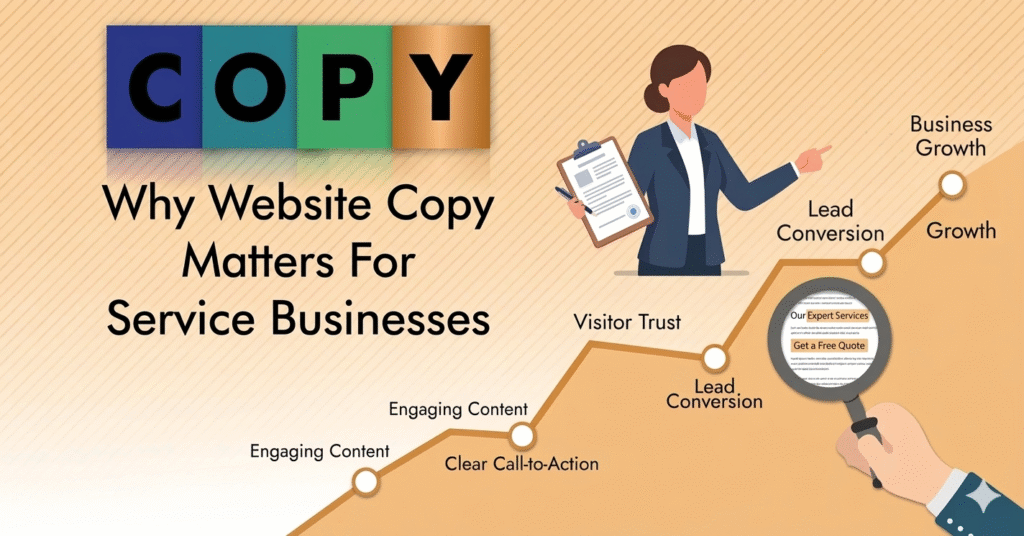
Why Website Copy Matters for Service Businesses
Services Need More Explanation Than Products
When someone buys a product, they can often compare features, colours, size, or price. Service businesses work differently. Potential clients usually want to know what the service includes, how it works, whether the provider is trustworthy, and what kind of outcome they can expect.
That means your website copy needs to do more than introduce your business. It needs to remove confusion and make your services feel easier to understand.
Good Copy Builds Trust
People are more likely to contact a business when the website feels clear, confident, and trustworthy. Strong copy helps create that feeling. It can show experience, explain your process, answer common questions, and make your business sound more credible.
Trust remains a major factor in business decision-making, and thought leadership research continues to show that useful, expert-led content can influence how buyers evaluate providers.
Good Copy Supports Conversions
Website copy should guide people towards action. A strong call to action, clear message, and logical page flow can all help turn visitors into leads. Pages that make the next step obvious tend to perform better than pages that look nice but do not give enough direction. Lead generation guidance also highlights the value of simple, clear calls to action that help users know exactly what to do next.
Good Copy Supports SEO
When your copy uses relevant language naturally and matches the page purpose, it also helps with SEO. Google recommends using descriptive titles, headings, and on-page text that reflect what users are actually looking for.
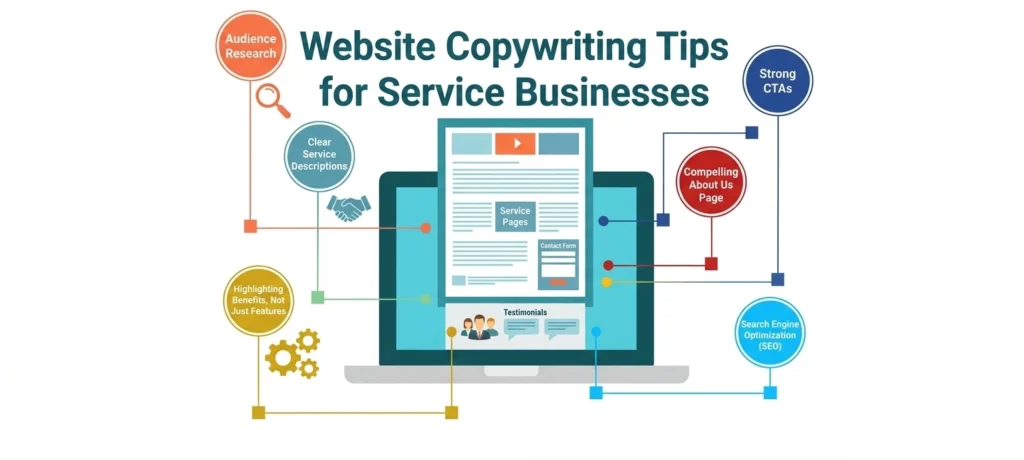
Start with a Clear Understanding of Your Audience
Before writing any website copy, it is important to know who you are speaking to. Good copy starts with audience understanding.
- Ask simple questions:
- Who is your ideal client?
- What problems are they trying to solve?
- What concerns do they have before buying?
- What result do they want most?
When you understand these things, your copy becomes more specific and more useful. Instead of using broad marketing language, you can speak directly to the visitor’s needs. This is also closely aligned with Google’s people-first approach, which encourages content creators to focus on genuinely helping users.
For example, a web design agency should not only say it builds websites. It should explain that it helps businesses create websites that look professional, support SEO, and generate more enquiries. That is much more meaningful to a potential client.
Focus on Clarity Before Creativity
Many businesses try too hard to sound unique, clever, or impressive. In reality, clear copy usually performs better.
Your visitors should be able to understand:
- what you do,
- who you help,
- and why it matters.
If your website uses too much jargon, abstract language, or vague claims, people may leave without taking action. Clear copy reduces confusion and helps users feel more confident in the business.
Try to keep your messaging simple:
- say what the service is
- explain who it is for
- show the benefit
- avoid unnecessary complexity
Google’s SEO guidance supports this approach by encouraging descriptive, easy-to-understand content that helps search engines and users understand page topics.
Write a Strong Homepage Message
Your homepage is often the first impression a potential client gets of your business. It should quickly answer four key questions:
- What do you do?
- Who do you help?
- What value do you offer?
- What should the visitor do next?
A strong homepage usually starts with a clear hero heading, followed by a short supporting statement and a strong call to action. This does not need to be complicated. In many cases, simple and direct copy works best.
For example, instead of writing something vague like “Transforming brands through innovation,” a service business may do better with something more specific like “Web Design and SEO Services for Growing Businesses.”
The goal is not to sound fancy. The goal is to make your message easy to understand and easy to act on. Lead generation best practices also support clear CTAs and obvious next steps on high-traffic pages.
Make Service Pages Specific and Useful
Service pages are some of the most important pages on a service business website. These pages should not be thin, generic, or filled with broad statements that could apply to any company.
A good service page should explain:
- what the service includes
- who it is for
- what problems it solves
- how the process works
- what outcomes clients can expect
It should also focus on benefits, not just features. For example, instead of only listing “monthly reporting,” explain that monthly reporting helps clients understand progress, performance, and next steps.
If possible, include proof such as testimonials, results, examples, or case studies. Specificity helps build trust. It also helps search engines better understand the relevance of the page. Google’s starter guidance supports detailed, descriptive content that helps users find what they need.
Write with SEO in Mind, but Keep It Natural
SEO copywriting should never feel forced. The goal is not to repeat keywords again and again. The goal is to use the language your audience naturally searches for and place it where it makes sense.
That usually means:
- using the main keyword in the page title and H1
- including related terms naturally in the body
- using descriptive subheadings
- matching the content to search intent
Google recommends using words that users would search for and placing them in important areas where they help describe the page clearly. At the same time, the content should still be written for people first.
A service page about SEO should clearly mention SEO services, but it should also talk about audits, on-page optimisation, technical SEO, local visibility, reporting, and business goals in a natural way.
Build Trust Through Your Copy
Trust is one of the biggest factors in service-based buying decisions. Your copy can support trust by showing that your business understands the work, communicates clearly, and makes realistic promises.
Some good ways to build trust through copy include:
- using testimonials
- mentioning real experience
- showing your process
- explaining how you work
- being honest about what clients can expect
- avoiding exaggerated claims
Thought leadership and trust research continue to show that buyers respond to useful, credible, expert-led information. That makes trust-focused website copy even more valuable for service businesses.
Instead of saying “We are the best in the industry,” it is usually better to say something more believable and useful, such as “We help service businesses improve website performance, search visibility, and lead generation through practical digital strategies.”
Use Calls to Action That Feel Clear and Relevant
A good website page should not leave the visitor wondering what to do next. Every important page should include a clear call to action that matches the user’s intent.
Examples include:
- Book a consultation
- Request a quote
- Speak to our team
- Get a free audit
- View our work
The CTA should feel connected to the page. A service page may invite someone to request a quote, while a blog may encourage them to explore a related service or contact the team for help.
The most effective calls to action are usually clear and direct. They tell the user what happens next and why it is worth taking that step.
Common Website Copywriting Mistakes Service Businesses Make
There are several common mistakes that weaken website copy:
Writing Vague Headlines
If the headline does not clearly explain what the page is about, visitors may lose interest quickly.
Talking Too Much About the Business
Good copy should connect with the client’s needs, not just the company’s background. Visitors want to know how your service helps them.
Using Too Much Jargon
Technical language can be useful in the right context, but too much jargon creates confusion.
Having Weak or Missing Calls to Action
If users do not know what to do next, they are less likely to convert.
Ignoring Search Intent
If the page does not match what users are actually looking for, it will struggle to perform well in search and may not satisfy visitors.
Making Big Claims Without Proof
Claims without evidence can make the copy feel less believable.
Google’s helpful content guidance supports the idea that useful, reliable, reader-focused content performs better than content designed mainly to impress or manipulate rankings.
Website Copywriting Tips for Better Results
If you want your website copy to perform better, focus on practical improvements.
Write for one clear audience.
- Lead with the main message.
- Keep sentences short and easy to follow.
- Use headings to improve readability.
- Focus on outcomes and benefits.
- Answer common objections.
- Add relevant internal links.
- Review and improve older copy regularly.
Google also recommends good site structure, descriptive headings, and crawlable links, which all support both SEO and user experience.
How Xofts Helps Service Businesses with Website Copywriting
At Xofts, we help service businesses create website copy that is clear, useful, SEO-friendly, and focused on conversions. We look at your audience, your services, and your business goals to create messaging that supports both search visibility and lead generation.
Our approach is not about filling pages with words. It is about writing copy that explains your value clearly, builds trust, and helps turn website visitors into enquiries. Contact us today.
Final Thoughts
Website copywriting matters because it helps service businesses communicate clearly, build trust, support SEO, and generate more leads. A strong website does not only look professional. It also says the right things in the right way.
For service businesses, the best copy is usually simple, specific, and useful. It should help people understand your services quickly and feel confident enough to take the next step.
When your website copy is built around real customer needs, clear structure, and helpful information, it becomes a valuable part of both your marketing and your sales process.